
Warwickshire Installed Masters Lodge looks to the future
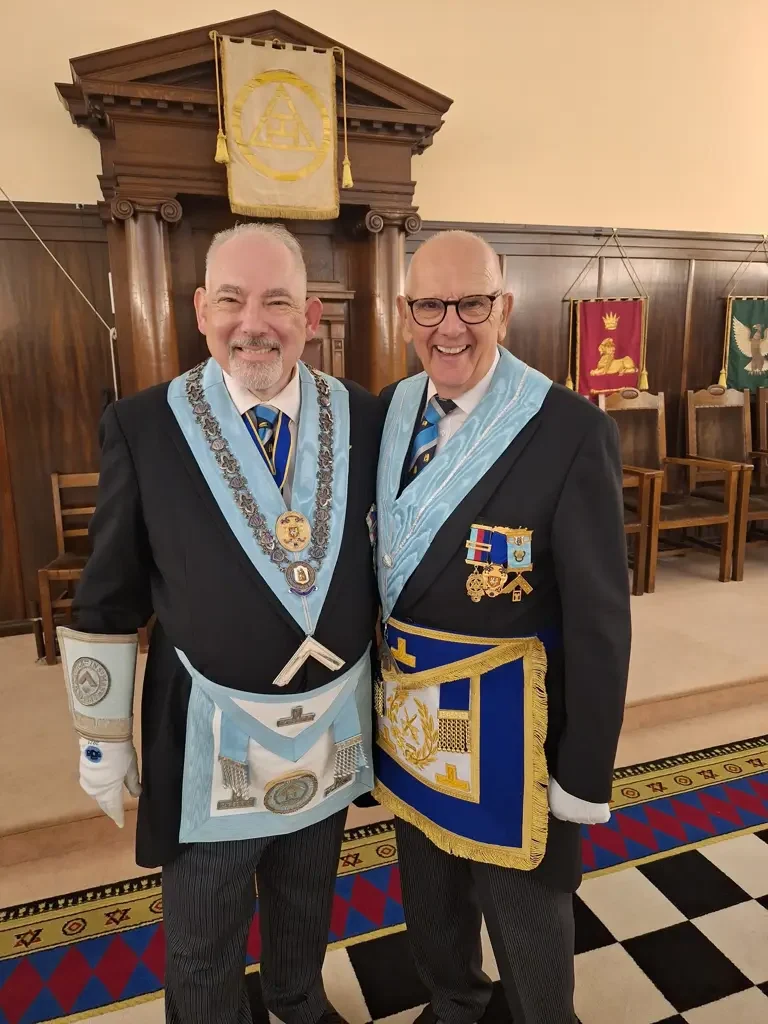
Warwickshire Installed Masters Lodge No. 4538 welcomed a new Master, celebrated a major charitable achievement and turned its attention to one of the most important issues facing Freemasonry at its September meeting.
Meeting at Kings Heath in Birmingham, Warwickshire Installed Masters Lodge – widely known simply as WIML – is the Province’s Lodge for Past Masters. As the leading Lodge in Warwickshire, it traces its history back to the 1920s and has, over the past century, provided a meeting place for generations of experienced Freemasons from across the Province.
Every Worshipful Brother in Warwickshire is entitled to join, and with a current membership of 627, the Lodge remains the largest and best-supported in the Province. Quarterly meetings regularly attract more than 200 brethren, drawn by the interesting speakers and the sense of occasion that comes from such a large gathering.
At the September meeting, David Greenwood was installed as Worshipful Master by the outgoing Master, David Butcher.

The evening also included the return of an original founder’s jewel from Warwickshire Installed Masters Lodge. The jewel, which had belonged to the founding secretary, had recently been returned to the current secretary and provided a fascinating tangible link with the Lodge’s early history.
As is customary, the newly installed Master addressed the Lodge, continuing a tradition that goes back to its very roots. S J Fenton, the Lodge’s first Master, delivered the inaugural address in 1928 on “The Lost Lodges of Warwickshire from 1728 to date” – and there were quite a number of them. Nearly a century later, David Greenwood chose to focus on the equally important subjects of retention and retrieval – not simply encouraging brethren who have resigned to return, but understanding why members leave in the first place and what Lodges can do to prevent it.
David explained that, for the past three years, he and his team have been working to understand resignations across the Province and identify ways of helping brethren remain within the Warwickshire Masonic family. Reasons for leaving can range from age, health and work commitments to transport difficulties or simply feeling that Freemasonry is “not for me”. In many cases, however, the real reason only becomes apparent through conversation. WIML retrieval presentation
His message was that prevention begins much earlier.
A new Initiate can naturally be the centre of attention at his first meeting, receiving considerable guidance and support. By his second or third meeting, however, there is a danger that he can suddenly feel he is expected to find his own way. David argued that involvement, mentoring and, above all, helping a new member to feel valued are crucial if Lodges are to build lasting engagement. WIML retrieval presentation
The statistics underline the challenge. David told the brethren that the retrieval team currently succeeds in bringing back around 7–9% of individual members once a resignation has taken place. By contrast, where a Lodge is considering surrendering its warrant and there is sufficient time to work with its members, the team has achieved a 42% retrieval rate, helping brethren transfer into other Lodges rather than leave Freemasonry altogether.
His presentation then looked more widely at how different generations approach membership, responsibility, communication and belonging. While acknowledging the inevitable generalisations involved, his central point was straightforward: the expectations of newer generations are not necessarily the same as those of the brethren who currently lead many Lodges.
Younger members, he suggested, want to feel involved, valued and that their time is being used well. That means Lodges may need to think carefully about progression, mentoring, meeting structure, communication, dining arrangements and opportunities for members to contribute. WIML retrieval presentation
Among the practical ideas he encouraged Lodges to consider were reviewing members’ progress, understanding what individual brethren can and want to do, mixing generations, allocating buddies or mentors, making meetings enjoyable and, where appropriate, reconsidering meeting lengths and dining arrangements. The objective is simple: create Lodges in which brethren want to remain, rather than relying on a retrieval team once they have decided to leave.
There was also an opportunity during the evening to celebrate a remarkable example of Warwickshire Freemasons working together for charity.
On behalf of the Warwickshire Light Blues Club, Richard Freakley presented the Provincial Grand Master, Philip Hall, with a cheque for £12,900, representing the proceeds of the Club’s recent charity skydive.
The money will go towards Warwickshire’s Tercentenary Appeal in support of Fisher House, which provides accommodation for the families of military patients receiving treatment at the Queen Elizabeth Hospital Birmingham.
The presentation was a fitting reminder of the enthusiasm and generosity that exists throughout the Province – and of the contribution newer Freemasons are already making to Warwickshire.
Following the formal meeting, the festive board once again demonstrated why WIML meetings are such a popular fixture in the Provincial calendar. With brethren gathered from Lodges across Warwickshire, it provides an opportunity not simply to dine together but to renew friendships, exchange ideas and share experiences with Past Masters from every part of the Province.
For brethren who have already served as Master of their Lodge but have yet to join Warwickshire Installed Masters Lodge, there is unlikely to be any shortage of proposers. With more than 600 members and Past Masters represented from across Warwickshire, WIML continues to fulfil the role it has played for more than a century – bringing together the experience of the past while helping to shape the future of Freemasonry in the Province.
Interested in joining WIML?
If you are a Past Master and would like to join Warwickshire Installed Masters Lodge No. 4538, please contact the Lodge Secretary for further information.